Unlocking Early Literacy: A Comprehensive Guide to Using the Alphabet Workbook for Kids
The transition from infancy to formal schooling is one of the most significant developmental leaps a child makes. At the heart of this journey lies literacy—the ability to decode symbols, understand language structures, and eventually read and write with confidence. For educators, parents, and caregivers, facilitating this process requires tools that are not only educational but also engaging enough to hold the attention of young minds. Enter the Alphabet Workbook for Kids, specifically designed formats like the Fun ABC Learning Book 6x9. These resources represent more than just pages of exercises; they are structured interventions that bridge the gap between play-based exploration and formal academic skill acquisition.
This article explores the pedagogical value, practical applications, and design considerations of alphabet workbooks, focusing on how high-quality, watercolor-style educational materials can enhance early childhood development. By examining the specific features of a 30-page, 6x9-inch workbook format, we can better understand why these tangible learning aids remain relevant in an increasingly digital world.
The Pedagogical Foundation of Trace-and-Learn Methods
Early childhood education research consistently highlights the importance of fine motor skill development alongside cognitive growth. The act of tracing letters is not merely a mechanical exercise; it is a multisensory experience that reinforces neural pathways associated with letter recognition and formation. When a child traces the letter 'A', their brain processes visual cues (the shape), tactile feedback (the movement of the hand), and kinesthetic memory (the muscle motion required to draw the curve). This convergence of senses creates a stronger memory trace than passive observation alone.
The Alphabet Workbook for Kids leverages this principle by offering dedicated space for letter tracing practice from A to Z. However, effective workbooks go beyond simple repetition. They integrate fun and simple learning activities that contextualize each letter. For instance, associating the letter 'B' with a bear or a ball helps children move from abstract symbol recognition to concrete semantic understanding. This approach aligns with constructivist learning theories, where knowledge is built through active engagement rather than rote memorization.
Design Elements That Drive Engagement
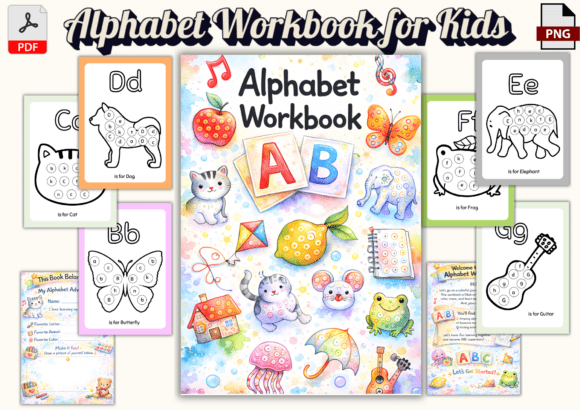
In the realm of educational publishing, aesthetics are not superficial; they are functional. Young learners, particularly those aged 3 to 6, are highly responsive to visual stimuli. The Fun ABC Learning Book 6x9 utilizes a kid-friendly watercolor design to create an inviting atmosphere. Unlike stark black-and-white worksheets that can feel clinical or daunting, soft watercolor illustrations reduce anxiety and encourage a positive emotional association with learning tasks.
- Visual Appeal: Colorful, artistic designs capture attention and sustain focus during shorter attention spans typical of preschoolers.
- Cognitive Load Management: Clean layouts with ample white space prevent overwhelming the learner, allowing them to focus on the primary task—tracing or coloring.
- Emotional Connection: Cute animals and objects provide friendly companions throughout the learning journey, making the workbook feel like a friend rather than a test.
These design choices are critical for maintaining engagement. When a child enjoys the aesthetic experience of the workbook, they are more likely to return to it voluntarily, fostering intrinsic motivation—a key predictor of long-term academic success.
Practical Applications in Diverse Learning Environments
One of the greatest strengths of a printable PDF or PNG workbook is its versatility across different educational settings. Whether used in a structured classroom, a homeschool curriculum, or as a quiet-time activity at home, the Alphabet Workbook for Kids adapts to various instructional strategies.
Homeschooling Flexibility
For homeschooling families, customization is paramount. Digital formats such as PDF and PNG allow parents to print only the sections needed for a specific lesson plan. If a child has already mastered the letter 'C', the parent can skip ahead to 'D', ensuring that learning time is efficient and tailored to the child’s pace. The 30-page structure provides a manageable scope for short attention spans, preventing fatigue while still offering substantial content.
Classroom Integration
Educators can utilize these workbooks as supplemental materials for centers or small-group instruction. The combination of tracing and coloring allows for differentiated instruction; some students may focus on precise letter formation, while others might engage more deeply with the creative aspects of coloring the accompanying animals. This flexibility supports diverse learning styles within a single classroom environment.
Therapeutic and Developmental Support
Occupational therapists and special education professionals often recommend tracing activities to improve hand-eye coordination and grip strength. The 6x9-inch size of the book is ergonomically suitable for small hands, providing a stable surface for writing practice. For children with developmental delays, the repetitive nature of tracing offers calming sensory input, helping to regulate arousal levels while practicing essential pre-writing skills.
Key Features and Specifications Explained
Understanding the technical specifications of a learning tool helps users maximize its potential. The Fun ABC Learning Book 6x9 is engineered with specific attributes that cater to both user convenience and educational efficacy.
Physical Dimensions and Format
The 6 x 9 inches size is a standard trade paperback dimension, chosen for its balance between portability and workspace. It is large enough to accommodate clear, legible letter guides without being so large that it becomes cumbersome for a young child to handle. The total of 30 pages offers a comprehensive yet concise overview of the alphabet, covering all 26 letters with room for introductory and concluding activities.
Digital Accessibility
Providing files in both PDF and PNG formats ensures broad compatibility. PDFs are ideal for printing multiple copies with consistent formatting, while PNG files offer high-resolution images that can be displayed on tablets or smartboards for interactive lessons. This dual-format approach caters to modern households that may use a mix of traditional paper-and-pencil methods and digital devices.
High-Resolution Printing
The emphasis on high-resolution files is crucial for clarity. Blurry lines or pixelated images can frustrate young learners who are trying to distinguish boundaries for tracing. High-quality output ensures that dashed lines and solid outlines are distinct, reducing errors and boosting the child’s confidence as they successfully complete each page.
Developing Holistic Skills Through Play-Based Learning
While the primary goal of the Alphabet Workbook for Kids is literacy, the benefits extend into broader developmental domains. The integration of coloring pages for each letter serves a dual purpose. First, it reinforces letter recognition by associating the character with a specific image. Second, it promotes creativity and artistic expression.
Fine motor development is another critical outcome. Holding a crayon or pencil correctly requires dexterity and control. As children color within the lines of the watercolor illustrations, they refine their pincer grasp and wrist stability. These physical skills are foundational for future handwriting proficiency. Furthermore, the act of choosing colors and deciding how to decorate the pages encourages decision-making and autonomy, fostering a sense of ownership over their learning process.
Considerations for Parents and Educators
To get the most out of any alphabet workbook, adults should adopt a supportive and patient role. The goal is not speed or perfection but exposure and enjoyment. Here are several best practices for implementation:
- Model the Behavior: Sit with the child and demonstrate how to hold the pencil and trace the letters. Verbalize the actions, such as "Now I’m going down," to reinforce directional concepts.
- Focus on Process, Not Product: Praise the effort and concentration rather than the neatness of the final result. This growth mindset encourages resilience when tasks become challenging.
- Integrate Multisensory Elements: Supplement the workbook with other activities, such as forming letters with clay or drawing them in sand, to deepen understanding.
- Create a Routine: Short, daily sessions are more effective than infrequent, lengthy ones. Consistency helps build habit and familiarity.
Additionally, it is important to monitor the child’s engagement levels. If frustration arises, it may be necessary to take a break or switch to a purely creative coloring session before returning to tracing. The workbook should remain a source of joy, not stress.
The Long-Term Impact of Early Literacy Tools
The skills acquired through early alphabet workbooks lay the groundwork for future academic achievement. Children who enter kindergarten with familiarity of letter shapes and names often experience a smoother transition into reading instruction. They are less likely to struggle with basic decoding tasks, allowing them to focus on comprehension and fluency sooner.
Moreover, the confidence gained from mastering these early tasks contributes to a positive self-concept as a learner. When a child can point to a letter and name it, or trace it independently, they experience a tangible sense of accomplishment. This early success breeds curiosity and a willingness to tackle more complex challenges later in life.
Conclusion
The Alphabet Workbook for Kids, exemplified by the Fun ABC Learning Book 6x9, represents a thoughtfully crafted intersection of art, education, and developmental psychology. By combining beautiful watercolor designs with structured tracing activities, it addresses the multifaceted needs of young learners. From enhancing fine motor skills to fostering a love for creativity, these workbooks serve as vital tools in the early literacy toolkit.
Whether used by homeschooling parents seeking customizable resources, teachers looking for engaging supplementary materials, or therapists supporting developmental goals, the value of this format is undeniable. In a world saturated with fleeting digital distractions, the simple, tactile act of tracing a letter on a beautifully illustrated page remains a powerful way to connect children with the fundamentals of language. By prioritizing quality design and play-based learning, we equip the next generation with the confidence and skills they need to navigate the written word with ease and enthusiasm.